Agentic AI: Architecting Autonomy from Experiment to Enterprise Scale
The conversation around AI has steadily shifted. We've moved past the initial awe of large language models simply generating text or images, and even beyond sophisticated Retrieval Augmented Generation (RAG) setups. The current frontier, and frankly, the only viable path to true AI scalability in the enterprise, lies in agentic AI and autonomous agents.
As a senior staff software engineer, I've watched countless technologies rise and fall on the promise of transformation. Agentic AI is different; its potential for automating complex, multi-step workflows is undeniable. However, the path from a compelling demo to a stable, compliant, and cost-effective production system is riddled with challenges that often get overlooked in the initial enthusiasm.
The Fundamental Shift: From Responders to Doers
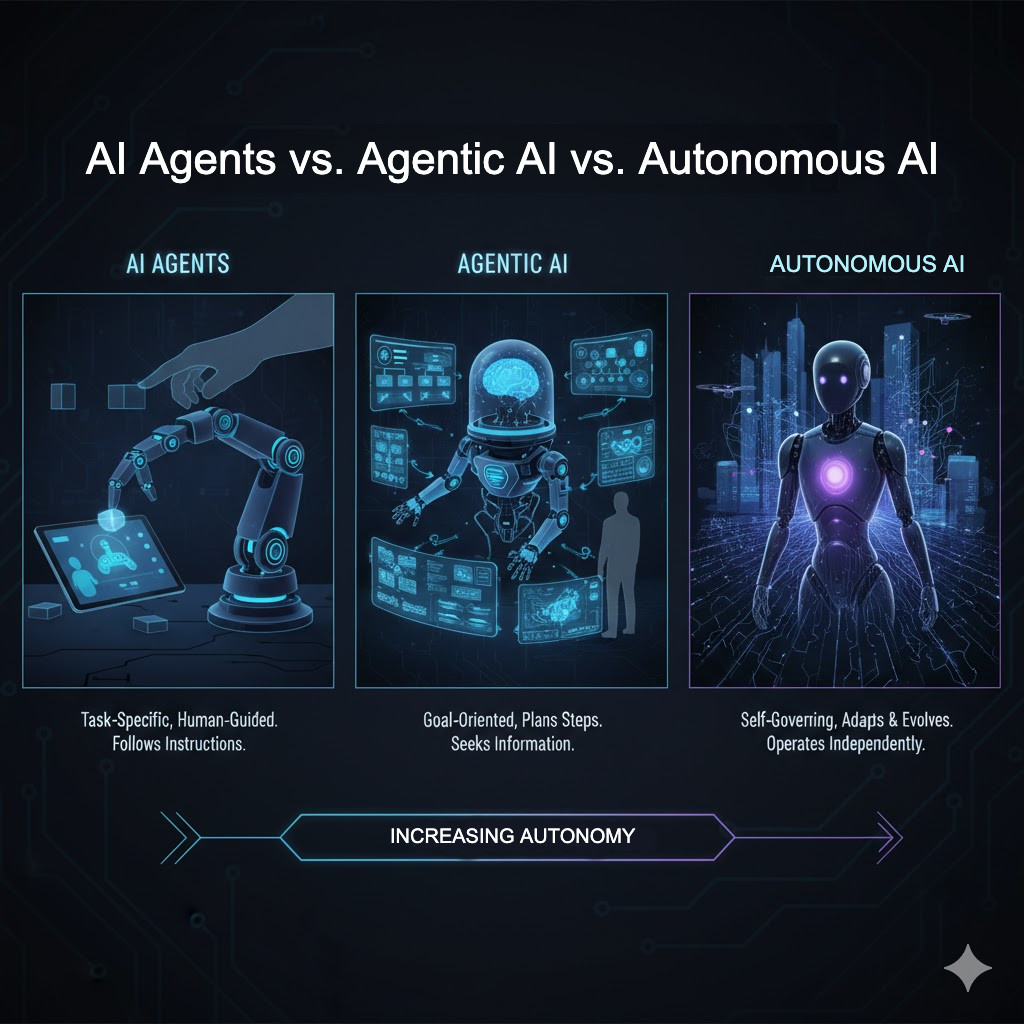
Let's be clear about what we're discussing. A typical generative AI assistant, or even a sophisticated RAG-powered chatbot, responds to a single prompt and stops. It's reactive. An AI agent, on the other hand, is proactive. It takes a goal, breaks it down into sub-goals, selects and calls external tools (APIs, databases, code execution environments), evaluates its own results, and iterates towards the objective—all without a human needing to intervene at each step.
Consider a support bot versus a support agent. The bot drafts a response. The agent reads the ticket, queries the CRM, checks account history, applies entitlement rules, drafts a resolution, escalates if policy limits are reached, and logs the outcome. It's a fundamental difference: an assistant answers questions; an agent completes workflows. This distinction changes everything about how we design and build these systems.
The Pilot-to-Production Chasm: Where 88% Fail
The data is stark: 79% of enterprises have adopted AI agents in some form, yet a mere 31% run them in production. A staggering 88% of AI agent pilots never reach production. And the kicker? It's rarely due to model failures. Instead, it's almost always a breakdown in scoping and governance that could have been prevented long before a single line of code was written.
For developers, this means our initial focus must extend beyond just the model's capabilities. We need to be involved in defining success criteria, understanding tool access permissions, and establishing governance frameworks before coding begins. Enterprises that nail this upfront report an average ROI of 171% from deployed agents. Those that don't, often find themselves stuck in