Agentic AI: Bridging the Pilot-to-Production Chasm in 2026
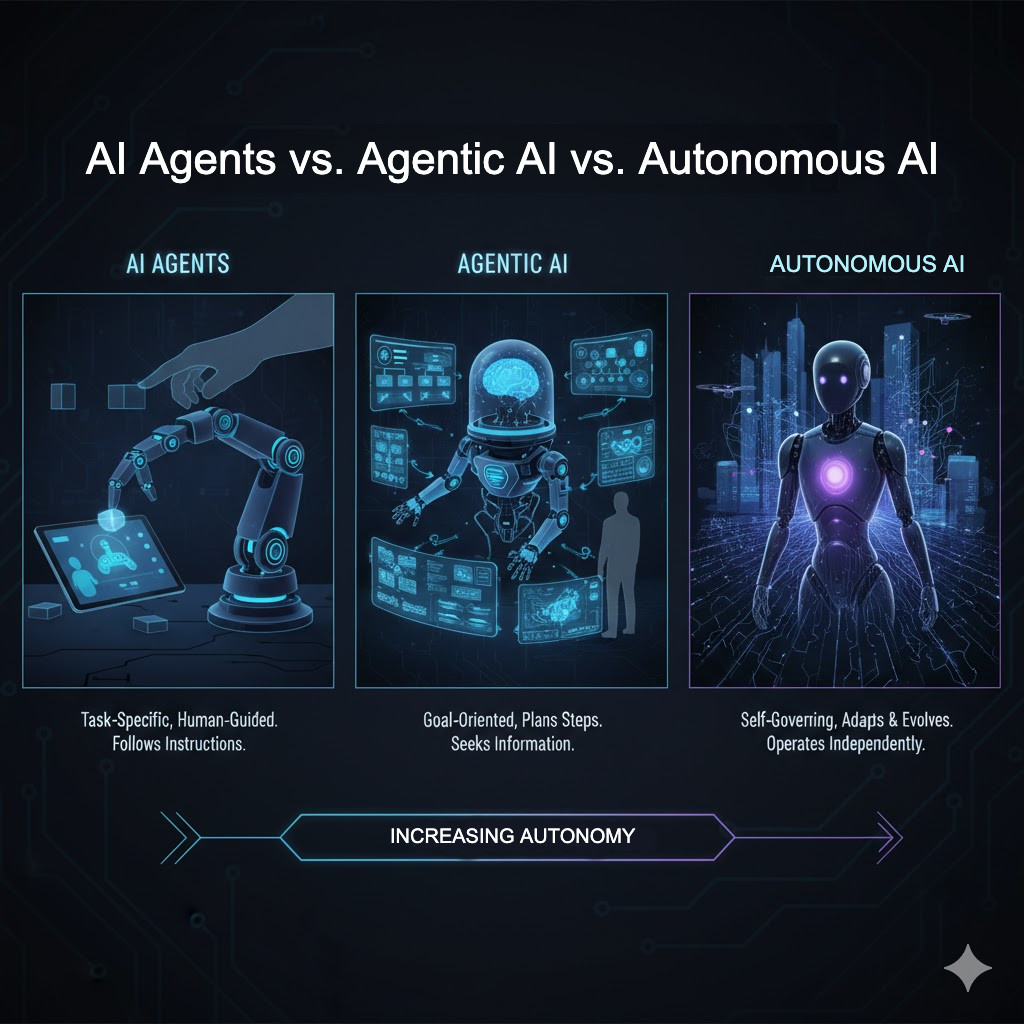
The promise of autonomous AI agents is compelling: systems that perceive, reason, plan, and act across complex enterprise workflows without continuous human intervention. Unlike a chatbot that merely responds to a prompt, an agent embarks on a multi-step mission, leveraging memory and external tools until a goal is met. This shift from reactive interaction to proactive, goal-directed execution is what defines agentic AI, and it's rapidly maturing into a critical piece of enterprise infrastructure.
However, the gap between compelling demos and robust production deployments is significant. While nearly 80% of enterprises have experimented with AI agents, only about 30% have successfully deployed them into production environments. The widely cited figure that roughly 88% of pilots fail to reach production isn't just a statistic; it's a stark reminder that the real challenges aren't about model quality, but about architecture, governance, and operational reality.
Deconstructing the Agent: Core Components
At its heart, an autonomous AI agent operates on a continuous loop, orchestrating its actions to achieve a defined objective. The working architecture typically comprises five fundamental components:
Perception: The agent's ability to ingest and interpret data from various sources—APIs, databases, documents, logs, or live streams—to understand its environment.
Reasoning and Planning: This is the 'brain' of the agent, where it processes perceived information, determines the next logical step, and constructs a multi-step plan to advance towards its goal.
Memory: Essential for maintaining state across interactions. Without memory, an agent would effectively restart from zero with every action, losing context and efficiency.
Tool Use: The capacity to invoke external systems, enterprise applications, or even other specialized agents. This is where an agent transcends text generation and interacts with the real world, executing commands and manipulating data.
Feedback Loops: A critical mechanism for self-correction. The agent observes the outcomes of its actions, evaluates them against its planned goals, and adjusts its future behavior accordingly.
This runtime pattern of sense, decide, act, observe, update is the bedrock of agentic autonomy. It's also why infrastructure matters as much as, if not more than, the underlying language model. The quality and freshness of data are paramount; a planner working on stale information is just a slow, error-prone chatbot.
Furthermore, the computational demands highlight an often-overlooked aspect: agents spend considerable time on CPU-bound tasks like planning, orchestration, sandboxed tool execution, and code generation. As GPU capabilities continue to soar, these CPU bottlenecks are increasingly becoming the limiting factor, underscoring that autonomy isn't solely a modeling problem, but fundamentally an infrastructure challenge.
The Production Imperative: Governance and Security First
The most significant hurdle in moving agents from pilot to production isn't technological novelty; it's the governance gap. Enterprises that report substantial ROI (an average of 171%, and even higher in the US) attribute success to establishing clear criteria, tool access protocols, and robust governance before development even begins. Skipping Stage 4, often related to security hardening, is a common precursor to incidents within the first 60 days of launch.
- Security is not an afterthought; it's foundational. Prompt injection, once a theoretical concern, is now actively exploited against production systems. To mitigate these risks, a pragmatic approach focuses on a few core controls:
- Least-Privilege Tool Permissions: Agents should only have access to the tools and data absolutely necessary for their specific tasks. Granular permissions are non-negotiable.
- Input Validation: Architectural controls for input validation are far more effective than relying solely on prompt engineering to guard against malicious inputs.
- Runtime Content Filters: Implement mechanisms to filter or flag inappropriate, sensitive, or potentially harmful content generated or processed by the agent in real-time.
- Network Egress Rules: Strict controls over outbound network connections prevent unauthorized data exfiltration or access to unsanctioned external services.
- Complete Audit Trails: Every tool call, every decision, and every interaction must be logged for accountability, debugging, and post-incident analysis.
Frameworks like the NIST AI Risk Management Framework and ISO/IEC 42001 provide excellent blueprints for these requirements, while OWASP's Top 10 for LLM Applications offers a critical focus on vulnerabilities like prompt injection. It's also worth noting the EU AI Act's evolving deadlines; if your agent falls under Annex III as high-risk, the compliance clock for specific obligations now runs to December 2, 2027.
The Model Context Protocol (MCP), while designed to standardize agent-tool connections, has paradoxically highlighted this governance challenge. Reports show thousands of valid credentials exposed in public MCP configuration files, often due to quickstart guides illustrating hardcoded API keys. Adopting new protocols without immediately securing them is akin to inviting risk.
Real-World Value and the Multi-Agent Frontier
Where do agents deliver tangible business value? Not in isolated, task-level drafting, but in end-to-end workflow completion. We're seeing significant deployments in areas like:
Customer service and contact center automation
Sales and CRM automation
Financial operations and reconciliation
Cybersecurity incident response
Healthcare administration
Underneath these use cases, a deeper trend is emerging: multi-agent systems. Here, specialized agents coordinate to tackle complex tasks, leading to faster and more capable solutions than a single, monolithic agent could achieve. However, a word of caution is warranted. While powerful, multi-agent systems amplify every problem you face with identity, data boundaries, and debugging. My advice to teams is pragmatic: master the governance and operationalization of a single, narrow agent workflow before attempting to orchestrate ten agents talking to each other.
Strategic Choices: Build, Buy, or Partner
The journey to production with agentic AI involves strategic decisions beyond just technical implementation. Whether to build in-house, buy a commercial solution, or partner with a vendor depends on internal capabilities, desired control, and cost considerations. Initial single-workflow deployments can range from $10K to $50K, while enterprise-wide systems often exceed $500K. It’s crucial to factor in that the median enterprise tends to underestimate the three-year total cost of ownership by roughly half, so adding a 40-60% buffer to vendor quotes is a sensible move.
Conclusion
Agentic AI is no longer experimental; it's a production reality transforming how enterprises operate. The technical heavy lifting isn't just in training better models, but in building the robust, secure, and governable infrastructure that allows these agents to operate reliably in the wild. Our focus as engineers must shift from merely demonstrating capability to mastering the lifecycle from pilot to production, ensuring that autonomy is paired with accountability and control. The challenges are real, but the solutions are within reach for teams prioritizing sound architecture, stringent security, and proactive governance.