Agentic AI: Deconstructing the Autonomous Paradigm for Developers
The landscape of artificial intelligence is in perpetual motion. We’ve seen the evolution from predictive models, which helped us forecast outcomes, to the explosion of generative AI, which empowered systems to create novel content. Now, we’re witnessing the rise of Agentic AI, a paradigm shift where AI systems don't just predict or generate, but autonomously act in the real world to achieve defined goals.
For us, the engineers tasked with bringing these visions to life, Agentic AI isn't just another buzzword. It represents a fundamental challenge to our traditional system design methodologies. This isn't merely about creating smarter chatbots; it’s about architecting systems that possess agency – the capacity to plan, decide, and execute without needing constant human intervention or step-by-step instructions.
Defining Agency: Beyond Reactive Systems
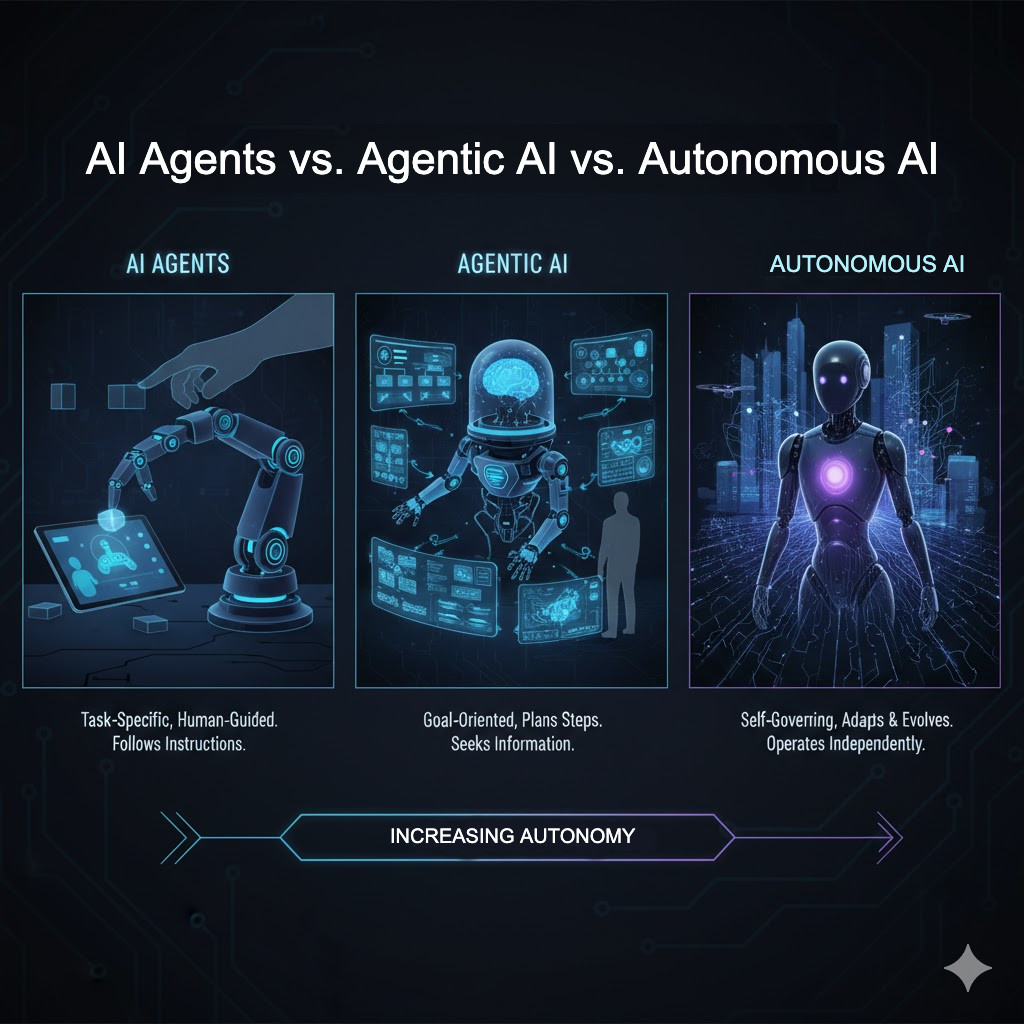
At its core, agentic AI systems are proactive. Unlike the generative AI models we've become accustomed to, which typically respond to a direct prompt, an AI agent takes the initiative. Give it a high-level objective, and it decides the necessary sequence of actions, adapts to changing conditions, and works towards that goal independently. This independence is what gives it its name; the system itself has agency.
This distinction is crucial. Imagine the difference between a chatbot that summarizes a document you provide (generative) and a system that identifies a need for a document summary, finds the relevant document, performs the summary, and then uses that summary to inform another action in a multi-step process (agentic). The latter demonstrates autonomy, adaptability, and goal-directed behavior – the hallmarks of agentic AI.
From a developer's perspective, this means we're moving beyond simple request-response cycles. We're designing systems that need internal models of their environment, sophisticated decision-making capabilities, and robust feedback loops to learn and improve. This is a significant leap from hard-coded rules or even static machine learning models.
The Engineering Realities of Autonomous Operations
- Building agentic systems introduces several compelling, and often complex, engineering considerations:
- Orchestrating Multi-Step Processes: Agentic AI thrives on performing sequences of tasks, often referred to as