Agentic AI in 2026: From Prompts to Autonomous Engineering
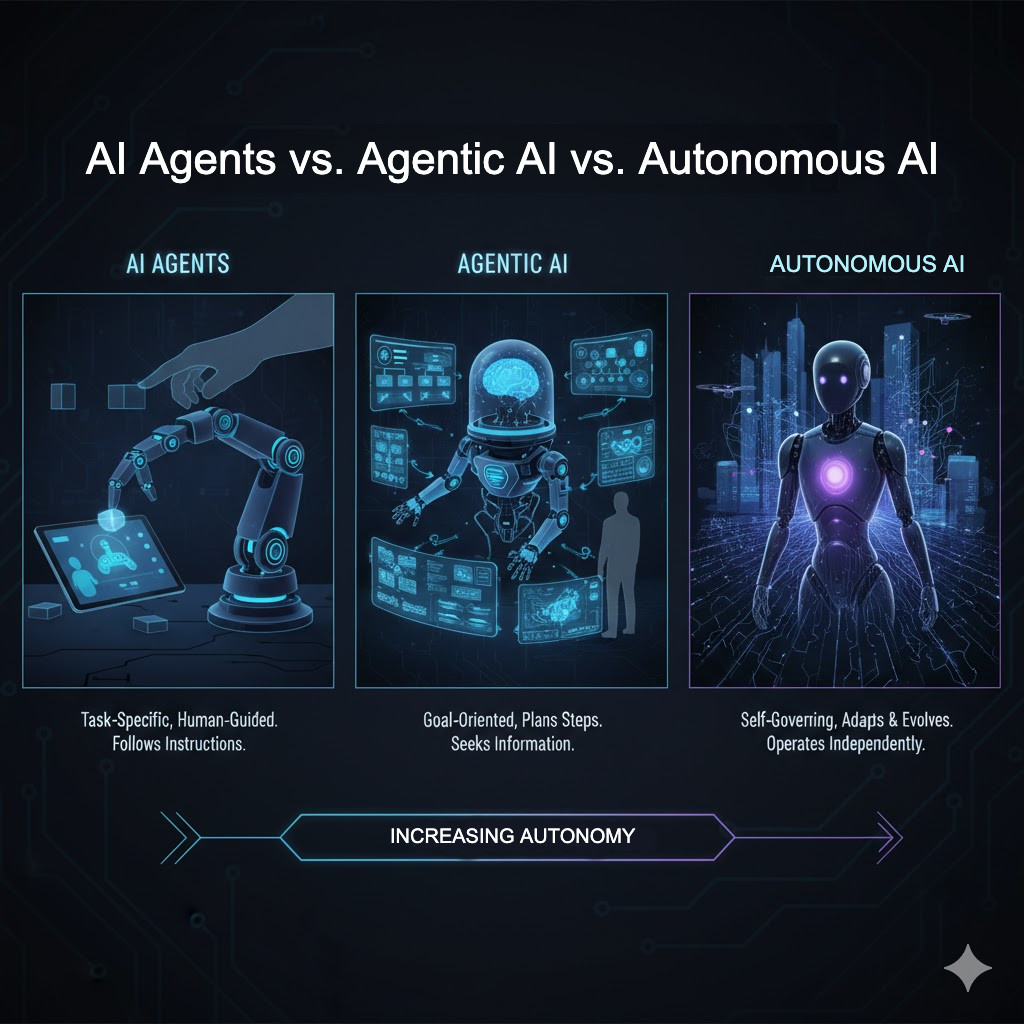
The past couple of years have been a whirlwind in the AI landscape. What started as impressive code generation and autocomplete has rapidly evolved, pushing us towards a more profound shift. We're no longer just marveling at what AI can do for a single prompt; we're now grappling with what happens when AI can reason, plan, and autonomously pursue complex, multi-step goals.
This is the reality of Agentic AI, and by 2026, it's not just a prototype or a niche experiment. It's becoming foundational to how engineering teams operate.
Beyond Prompt-Response: The Agentic Leap
The core difference with agentic AI isn't simply better models or more nuanced prompting strategies. It's about sustained execution. These systems can engage in long-running workflows, invoke development tools, interpret results, and iterate over time. Imagine an AI that doesn't just suggest a code block but actively understands a bug report, traverses your codebase, identifies the problem, implements a fix, runs tests, and even drafts documentation for the change.
This capability means entire segments of the Software Development Lifecycle (SDLC) are transitioning from human-executed tasks to autonomously executed ones. We're shifting from AI as a sophisticated coding assistant to AI as an autonomous, multi-skilled team member. Agents will increasingly act as the 'first-pass executor,' whether it's analyzing feasibility during planning, implementing features, expanding test coverage, or surfacing risks during review. This compresses coordination time, allowing for more continuous workflows.
The real gain here isn't just raw speed. It's about cognitive leverage. Engineers are freed from the repetitive, lower-order tasks that consume so much time. Fewer handoffs, less context switching, and a reduction in the rediscovery of system knowledge means we can operate at a higher level of abstraction for longer periods, focusing on the creative and strategic challenges that truly move the needle.
The Engineer as Orchestrator
This shift redefines our role as engineers. We're moving from being primarily code creators to system orchestrators and curators. Our value increasingly lies in designing the overarching system architecture, defining the precise objectives and guardrails for our AI counterparts, and rigorously validating the final output to ensure it's robust, secure, and perfectly aligned with business goals.
The operating model for leading teams is becoming clear: delegate, review, and own.
Delegate: AI agents handle first-pass execution, scaffolding, implementation, testing, and even documentation.
Review: Engineers scrutinize outputs for correctness, potential risks, and alignment with architectural principles.
Own: Humans retain ownership of the architecture, critical trade-offs, and ultimate outcomes. Accountability remains firmly with the human team.
This approach allows autonomy to scale without diluting responsibility, reinforcing that systems thinking is now paramount, not just syntax mastery.
Agent Archetypes: Where Agents Live and Work
- As this technology matures, different categories of AI coding agents are emerging, each optimized for specific developer workflows:
- CLI-first agents: These live directly in your terminal, behaving like highly capable command-line collaborators. They orchestrate development workflows from where many experienced engineers already spend a lot of time. They are often the most flexible and hackable.
- IDE-native agents: Embedded within the development environment (think VS Code extensions), these tools operate directly on the editor state. They can edit multiple files simultaneously and understand project structure, optimizing for developer flow by keeping engineers in their familiar coding environment while the agent handles mechanical work.
- Cloud Engineering Agents: These are perhaps the most disruptive. They take work assignments and execute them independently in persistent cloud environments. They can explore entire repositories, implement features, and operate for extended periods without direct human intervention, signaling the beginning of truly delegated software engineering.
The Great Architectural Convergence
Despite their varied interfaces and deployment models, the underlying architectures of major coding agents are converging on a set of common primitives. If you peek under the hood of systems like Claude Code, Gemini, or Devin, you'll find similar foundational ideas at play.
Key architectural components include:
Human-readable configuration files: These are crucial. They explain the structure and conventions of a project, acting as persistent instructions that shape how an agent understands and operates within a repository. This isn't just about code; it's about context.
Tool interaction: Agents are not just generating text; they're interacting with real development tools. This includes compilers, debuggers, version control systems, package managers, test runners, and linters. They don't just suggest a solution; they execute it.
Sub-agent orchestration: Many platforms now support specialized agents designed for different tasks, allowing for a more modular and robust approach to complex problems.
Consider a simplified configuration for an agent tasked with a feature implementation:
agent_name: FeatureImplementer
description: An agent responsible for implementing new features based on specs.# Project context and constraints
project_config:
language: Python
framework: FastAPI
database: PostgreSQL
version_control: git
test_framework: pytest
coding_standards_guide: .pylintrc
goal:
type: implement_feature
feature_id: "AUTH-2026"
user_story: "As a user, I want to log in using my Google account."
acceptance_criteria:
- "Successful redirection to Google OAuth."
- "User profile created/updated on successful login."
- "JWT token issued to client."
# Tools the agent is allowed to use
enabled_tools:
- name: code_editor # For making file changes
- name: git_cli # For cloning, committing, branching
- name: terminal_runner # For running tests, linters, local server
- name: documentation_generator # For updating README, API docs
# Workflow steps for the agent
workflow:
- action: analyze_requirements
description: Parse user story and acceptance criteria, identify affected components.
- action: plan_implementation
description: Create a high-level plan for file changes, new functions, and database migrations.
- action: execute_code_changes
description: Write and modify code based on the implementation plan, adhere to standards.
- action: run_tests
description: Execute unit and integration tests, fix any detected failures.
- action: update_documentation
description: Update relevant API endpoints and user guides.
- action: create_pull_request
description: Prepare a pull request with code, tests, and documentation.
This type of configuration provides a clear directive for the agent, allowing it to operate autonomously while remaining aligned with project standards and human oversight.
The Road Ahead
By 2026, agentic AI is no longer a futuristic concept but a deployed reality across software engineering and beyond. It promises significant reductions in operating costs, faster cycle times, and a more efficient allocation of talent. This isn't about replacing engineers; it's about amplifying our capabilities, allowing us to focus on the higher-order challenges that demand genuine human ingenuity. The future of software development isn't just writing code; it's intelligently directing and orchestrating a powerful team of AI engineers.