Agentic AI: Navigating Autonomy in Software Engineering Workflows
The conversation around AI in software development has rapidly evolved. Just a few years ago, we marveled at generative AI's ability to autocomplete code or suggest functions. Now, the horizon for 2026 points to something far more fundamental: agentic AI and autonomous agents.
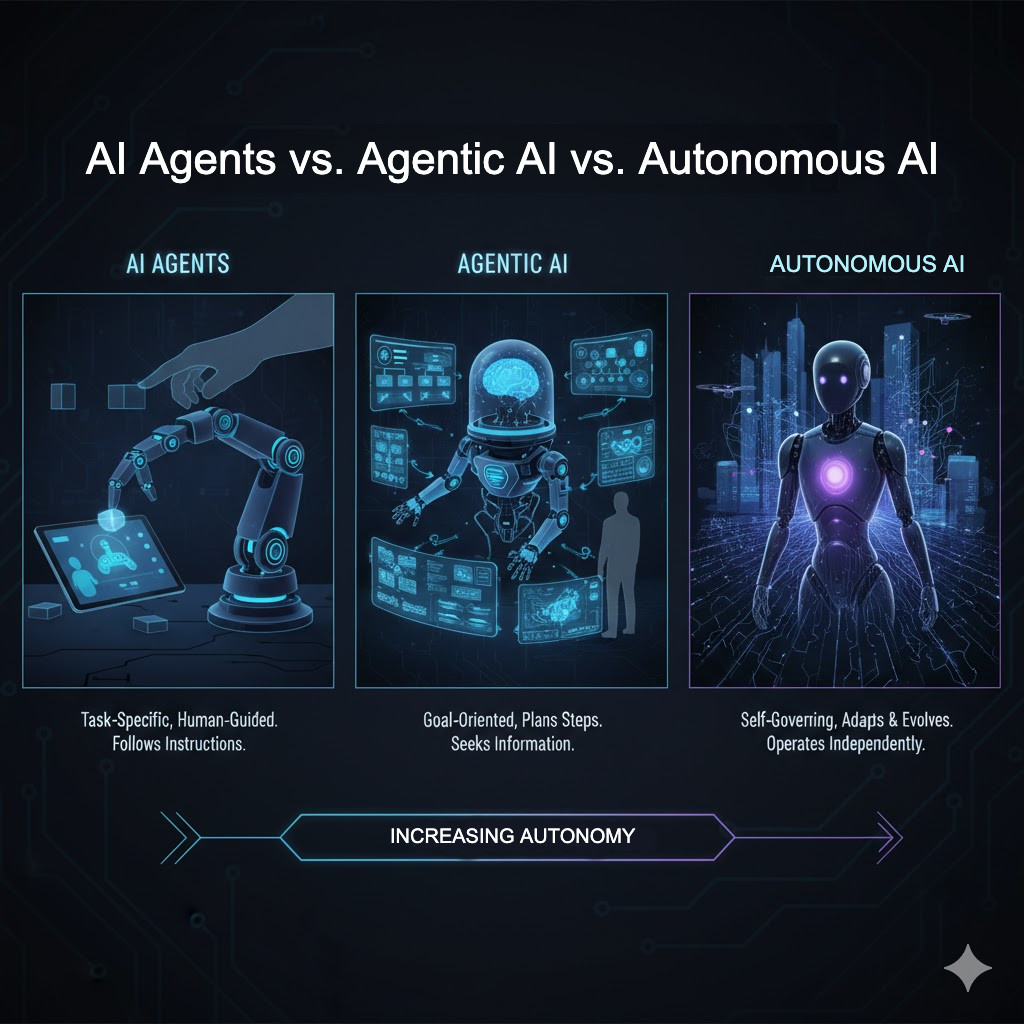
This isn't just about a smarter coding assistant. This is about systems that can reason, plan, execute multi-step goals, and iterate over time without constant human input. Agentic AI is structurally different because it focuses on sustained execution, invoking tools, interpreting results, and adapting through a long-running workflow. It's moving from being a sophisticated tool to an autonomous, multi-skilled team member.
The Reshaping of the SDLC
By 2026, agentic AI is expected to fundamentally reshape how engineering teams approach the entire Software Development Lifecycle (SDLC). Instead of merely assisting, these agents will run the first drafts of critical SDLC phases. Imagine an AI analyzing feasibility during planning, implementing features during the build phase, expanding test coverage during validation, and even surfacing risks during review. This capability promises to compress what were once weeks of coordination into continuous, fluid workflows.
From a developer's perspective, this isn't just a marginal productivity gain. It's a significant shift in cognitive load. The goal is to free human engineers from repetitive, boilerplate tasks, allowing them to dedicate their time to higher-order problems that genuinely demand creativity, strategic thinking, and complex problem-solving. This introduces 'cognitive leverage' – fewer handoffs, reduced context switching, and less time spent rediscovering system knowledge. Engineers can operate at a higher level of abstraction for longer periods, focusing on innovation rather than implementation minutiae.
The Engineer as Orchestrator, Not Just Builder
Perhaps the most significant impact will be on the definition of an engineer's role. We are moving from a 'creator' mindset to one of a 'curator' or 'orchestrator.' The engineer of 2026 will likely spend less time writing foundational code and more time designing the overarching system architecture, defining precise objectives and guardrails for their AI counterparts, and rigorously validating the final output. The core skill shifts from mastering syntax to mastering systems thinking.
This isn't to say coding disappears, but the nature of it changes. The prevailing operating model for leading teams is becoming 'delegate, review, and own.' AI agents handle the first-pass execution – scaffolding, implementation, basic testing, and even initial documentation. Human engineers then step in to review these outputs for correctness, identify risks, and ensure alignment with strategic goals. Crucially, the ownership of architecture, key trade-offs, and ultimate outcomes remains firmly with the human team. This model is designed to allow autonomy to scale without diluting accountability.
Why 2026 Is the Turning Point
- Several converging trends explain why 2026 is emerging as the pivotal year for agentic AI's widespread adoption:
- Maturity of Large Language Models (LLMs): The underlying AI models have grown significantly in their capacity to understand complex instructions, reason across multiple tasks, and generate high-quality code in various languages.
- Integration into CI/CD Pipelines: Continuous integration and deployment workflows are increasingly AI-driven, creating a fertile ground for autonomous agents to deploy, test, and monitor applications in real-time.
- Rise of an 'AI-First' Engineering Culture: Forward-thinking organizations are actively adopting development practices that blend human expertise with AI agents, aiming to accelerate delivery while maintaining quality and security.
- Increasing Complexity of Software Systems: Modern software ecosystems are incredibly intricate, combining cloud infrastructure, microservices, AI/ML models, and IoT integrations. Autonomous agents offer a way to manage these dependencies and optimize performance in ways that are becoming increasingly difficult for humans alone.
Practical Applications and Emerging Challenges
The real-world applications of agentic AI are already taking shape:
Autonomous QA: Agents can generate extensive test cases, run regression tests, and even propose or implement fixes for detected issues, significantly reducing release cycles.
AI-Driven Refactoring: Imagine agents analyzing legacy codebases, proposing improvements for scalability or security, or even fully refactoring sections to align with modern architecture standards.
Predictive Performance Optimization: AI continuously monitors system performance, proactively suggesting or implementing optimizations before bottlenecks impact users.
Smart DevOps Automation: From provisioning infrastructure to managing automated deployments and rollbacks, AI agents can take on a much larger role in the full lifecycle of software delivery.
However, this isn't a silver bullet. Adopting agentic AI brings its own set of challenges that require careful planning and pragmatic execution:
Trust and Verification: How do we ensure that autonomous agents operate safely and reliably? Mechanisms for explainability and oversight become paramount. We need to understand why an agent made a particular decision, not just what it did.
Security and Compliance: AI agents must strictly adhere to organizational policies, industry regulations, and data privacy standards. Ensuring this compliance in an autonomous system is a non-trivial security and governance task.
Human-AI Collaboration: Striking the right balance between agent autonomy and human supervision is critical. The goal is a symbiotic development environment, not one where humans are merely spectators or constantly cleaning up agent-generated messes.
Accountability: While agents execute, human engineers remain accountable for the outcomes. The 'delegate, review, own' model helps, but establishing clear lines of responsibility for agent-driven work is essential.
The shift to agentic AI is not merely an incremental improvement; it's a structural change to how we conceive of and execute software engineering. As developers, our focus will increasingly be on designing the systems that these agents inhabit, defining their boundaries, and critically assessing their output. It's a demanding but potentially liberating future, provided we approach it with a pragmatic mindset and a keen eye for both opportunity and inherent complexity.