Beyond Generative: Navigating the Agentic AI Paradigm Shift in Software Development
A few years back, generative AI models like large language models stormed the scene, showing us what was possible in producing text, images, and code at scale. We've largely moved past the initial awe, now integrating these tools as sophisticated assistants for drafting documentation, generating boilerplate, or refining code snippets. But a more significant evolution is underway, one that shifts AI's role from a limited tool to a genuinely collaborative entity: Agentic AI.
What Exactly is Agentic AI?
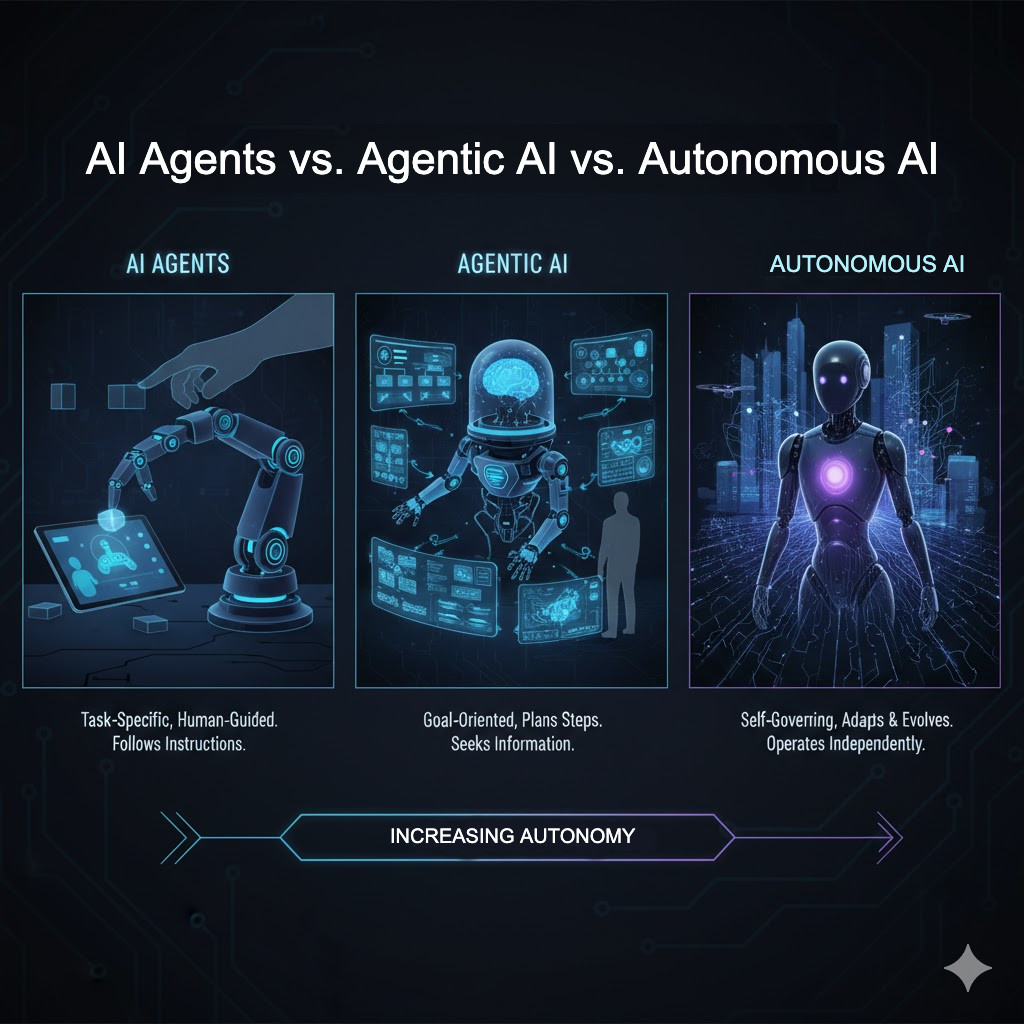
To put it plainly, Agentic AI does more than just generate. Where a generative model might give you a block of code based on a prompt, an agentic system is designed to act, reason, collaborate, and execute on its own to achieve a predefined goal. Think of it as moving from an AI that gives you answers to an AI that takes action.
These systems are characterized by their ability to plan and pursue multi-step goals autonomously. They can combine various APIs and tools, engage with dynamic environments, make decisions based on evolving data, employ reasoning, and continuously learn and adapt over time. This isn't just about better prompting; it’s about sustained, goal-oriented execution across complex workflows.
Reshaping the Engineering Workflow
The most tangible impact of this shift will be felt directly in our software development lifecycle (SDLC). We’re talking about more than just an intelligent coding assistant; we’re moving towards AI as an autonomous, multi-skilled team member. By 2026, agentic AI is expected to run first drafts of entire segments of the SDLC. This means tasks like:
Feasibility Analysis: Agents could analyze project requirements and existing systems to provide initial feasibility assessments during the planning phase.
Feature Implementation: They might scaffold new features, implementing basic functionality and integrating with existing APIs.
Test Coverage: Autonomous agents can expand test suites, write new tests, and even identify edge cases that humans might overlook.
Risk Surfacing: During review, agents could flag potential security vulnerabilities, performance bottlenecks, or architectural inconsistencies.
Documentation: Generating and maintaining up-to-date documentation based on code changes becomes a continuous, automated process.
This isn't about eliminating human engineers but about compressing weeks of coordination and repetitive work into continuous, more efficient workflows. Reports suggest that AI-centric organizations are already seeing significant reductions in operating costs and increases in profit margins due to automation, faster cycle times, and more efficient allocation of talent.
Engineers as Orchestrators, Not Just Builders
This evolution necessitates a fundamental redefinition of our roles as engineers. We'll spend less time writing foundational code and more time orchestrating a dynamic portfolio of AI agents, reusable components, and external services. The core skill shifts from syntax mastery to systems thinking.
Our value will increasingly lie in:
Designing Overarching System Architecture: Defining how various agents and human teams interact to achieve complex objectives.
Defining Precise Objectives and Guardrails: Setting clear, measurable goals for AI agents and establishing the boundaries within which they can operate.
Rigorously Validating Output: Ensuring that the agent's work is correct, robust, secure, and perfectly aligned with business goals. This is where human judgment remains paramount.
Leading teams are converging on a simple operating model: delegate, review, and own. AI agents handle the first-pass execution, scaffolding, implementation, testing, and documentation. Human engineers then review these outputs for correctness, identify risks, and ensure alignment with strategic objectives. The ownership of architecture, critical trade-offs, and ultimate outcomes firmly remains with human engineers. This clarity allows us to scale autonomy without diluting accountability.
The Underpinnings and Ethical Considerations
Naturally, such advanced capabilities demand significantly greater processing power. This is fueling a turning point in edge AI, neuromorphic computing (systems inspired by the human brain), and the long-term potential of quantum computing. Technologies like reservoir computing, which uses photonic technology for quick responses in pattern recognition and signal processing, are already here, enabling faster decision-making at the edge.
However, it's crucial to address the ethical concerns. The pursuit of increasingly autonomous systems, especially those bordering on artificial general intelligence, brings risks related to removing humans from critical decision-making processes. Companies are actively exploring