Navigating AI-Assisted Development: Beyond the Hype Cycle
AI is no longer a novelty in software development. It's embedded in our editors, terminals, CI pipelines, and even product discovery workflows. The conversation has moved beyond should we use AI to how and where we integrate it responsibly and effectively.
What AI Developer Tools Are (and Aren't)
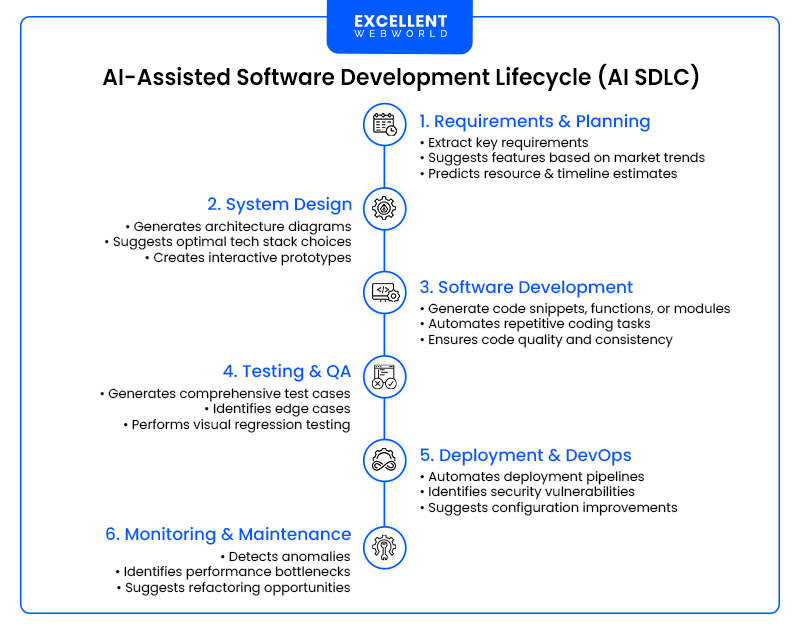
At their core, AI developer tools are software products and services that leverage artificial intelligence—specifically large language models (LLMs), embeddings, and automation agents—to streamline and enhance aspects of software development. Their aim is clear: reduce repetitive work, improve code quality, and accelerate delivery cycles. They go beyond simple syntax correction or suggestions; modern tools now provide support across the entire development lifecycle, from code generation and security scanning to testing, documentation, and debugging. The result for teams that adopt these tools is typically a reduction in manual effort and improved consistency, reliability, and maintainability of codebases.
However, it's crucial to understand what they aren't. They aren't magic bullets that replace critical thinking or deep understanding. Instead, they act as powerful amplifiers for those with solid foundational skills, and unforgiving exposers for those without.
The Modern AI Stack: Beyond the IDE
Professional development teams are increasingly relying on a layered AI setup that extends far beyond a simple inline code assistant:
Editor-level copilots: These provide context-aware suggestions, autocomplete, and refactoring directly within the IDE.
Agent-based workflows: Autonomous AI agents are emerging to handle task decomposition, generate pull request diffs, or even orchestrate multi-step development processes.
Terminal/repo-aware assistants: Tools that understand the entire codebase, facilitating navigation, summarizing legacy systems, and assisting with migrations.
AI in CI/CD: Integrating AI for test generation, security scanning, performance hints, and even automated vulnerability patching.
AI in product discovery: Assisting with initial specification drafts, enumerating edge cases, and generating acceptance criteria.
Used correctly, this layered stack significantly accelerates thinking. Used poorly, it risks replacing it.
High-Leverage Use Cases
- When deployed thoughtfully, AI tools offer immense leverage for developers:
- Mechanical Code Generation: This is perhaps the most immediate benefit. Generating boilerplate code for Data Transfer Objects (DTOs), database schemas, API adapters, or repetitive refactoring patterns. This is leverage, not cheating; engineers shouldn't be typing the same glue code repeatedly.
- Codebase Exploration and Recall: AI is exceptionally effective at explaining unfamiliar code, summarizing legacy systems, and finding related files and patterns. For large, complex, or inherited codebases, this can drastically reduce onboarding time and improve developer velocity.
- First-Draft Thinking: For initial architecture sketches, brainstorming edge cases, or outlining design patterns, AI can quickly generate a starting point. The critical rule here is explicit: AI drafts, engineers decide. The human engineer remains the ultimate arbiter of quality and correctness.
- Test and Coverage Expansion: AI can generate meaningful test cases, identify missing test coverage, and propose boundary conditions. While powerful, it's vital to remember that AI does not understand business risk. Humans must still decide which tests truly matter and align with product requirements.
The Minefield: Where AI Can Burn You
- Despite the benefits, there are significant risks if AI tools are used without caution, leading many teams to get burned:
- Security-Sensitive Code: Generating code that handles authentication, authorization, or cryptography without deep security knowledge is perilous. AI can introduce injection risks, misuse primitives, invent insecure crypto patterns, or normalize secrets handling mistakes. If you don't already understand security, AI will not save you; it will amplify your vulnerabilities.
- Performance-Critical Paths: AI-generated code can often add unnecessary abstraction, introduce hidden N+1 query problems, or ignore crucial cache behavior. Optimization demands a deep understanding of system architecture and data flow—mental models that AI fundamentally lacks.
- Architecture by Autocomplete: This is arguably the biggest failure mode. Allowing AI to dictate architectural patterns often leads to dozens of micro-abstractions, unclear ownership boundaries, and framework-driven design instead of problem-driven design. AI can generate structure, but it cannot generate sustainable architecture.
- Blind Trust in 'Looks Right': AI output is often syntactically correct and aesthetically polished, but frequently logically wrong or context-blind. The more polished the output, the more dangerous blind acceptance becomes. Critical review is non-negotiable.
The Shifting Sands of the Developer Role
AI is fundamentally changing the developer's role. Where writing code was once the primary value, and syntax knowledge and typing speed were paramount, the new paradigm emphasizes judgment, code review skills, and decision quality. Modern developers are increasingly becoming editors and reviewers. Typing is cheap; thinking is expensive.
This shift means that the best developers in 2026 aren't those who memorize syntax; they are those who:
Ask better questions.
Think critically.
Validate outputs rigorously.
Design systems intelligently.
New Developer Success Factors
- To thrive in this AI-amplified landscape, developers must cultivate specific skills:
- Deep Mental Models: Understanding why constraints exist, how systems behave, and what the underlying principles are. AI amplifies people with strong mental models and exposes those without them.
- Architecture Literacy: The ability to explain why a system is shaped the way it is, to simplify rather than expand, and to discern sustainable design. AI tends to add complexity; senior engineers know when and how to remove it.
- Code Review Mastery: Exceptional reviewers catch security issues, identify unnecessary complexity, and enforce consistency and intent. AI produces volume; humans ensure quality.
- Taste and Restraint: Good engineers stand out by reducing surface area, preferring boring and stable solutions, and knowing when not to over-engineer. This understated wisdom is crucial.
Practical Tools and Workflows
While the market is flooded with AI tools, some have emerged as essential for modern development:
GitHub Copilot / Tabnine: For rapid code generation, autocomplete, and reducing boilerplate.
Claude Code / ChatGPT: Excellent for debugging, explaining errors, exploring solution approaches, and step-by-step reasoning.
Google Gemini Code: Strong for optimization and cloud-native workflows, especially at scale.
Mutable.ai: For auto-refactoring, documentation generation, and test creation.
LangChain / LangGraph: Orchestration frameworks that allow developers to build modular AI agents and create production-ready, context-aware workflows.
Consider a simple agent workflow for an automated code review and refactoring task, demonstrating how these tools can be chained:
- ```yaml
workflow:
- name: CodeFetchAgent description: Fetches new code changes from a Git branch. tool: git_cli action: