Navigating the Agentic AI Landscape: Architectures and Workflows for 2026 Development
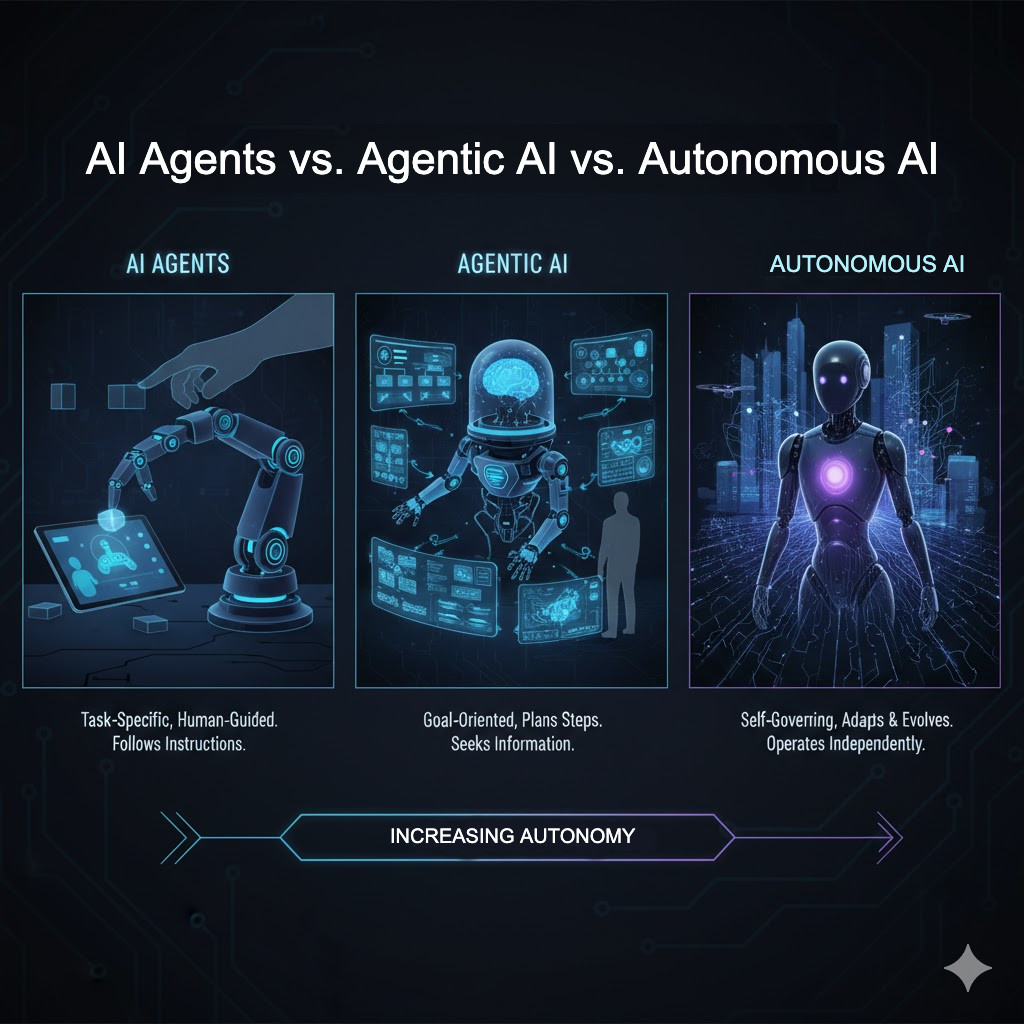
The conversation around AI in software development has evolved rapidly. A couple of years ago, we were marveling at advanced autocomplete and clever code suggestions. Today, the focus has firmly shifted to agentic AI and autonomous agents – systems capable of perceiving, reasoning, and taking real-world actions to achieve objectives, often without human approval at every single step.
For many, the idea of truly autonomous agents might still conjure images of sci-fi. However, in 2026, these systems are no longer a distant dream but a tangible reality transforming our workflows. The initial 'one-shot' fallacy, where a simple prompt was expected to yield a perfect, complete solution, has been replaced by robust agentic architectures designed for persistent, complex tasks.
The Great Architectural Convergence
One of the most striking observations in the current landscape is the convergence of underlying architectures across major AI coding tools. Whether you're interacting with a cloud-based platform or a local IDE-integrated assistant, the foundational principles are remarkably similar. This isn't accidental; the industry has collectively identified the core ingredients for building genuinely useful development agents.
These architectural primitives include:
Long-running execution: Agents aren't just generating snippets; they're operating over extended periods, iterating on problems.
Sub-agent orchestration: Complex tasks are decomposed and handled by specialized sub-agents working in concert, much like a team of human engineers.
Human-readable configuration: Agents rely on structured configuration files that define project conventions, architecture, and constraints. These act as persistent instructions, guiding the agent's understanding and operation within a repository.
Real development tool interaction: Gone are the days of agents just generating text. Modern agents interact directly with compilers, debuggers, version control systems (like Git), package managers, IDEs, and even cloud APIs. They don't just suggest solutions; they execute them.
Specialized roles: Platforms increasingly support agents tailored for specific tasks, mimicking roles like a 'testing agent' or a 'documentation agent'.
This convergence suggests a maturation of the field, moving past experimental approaches to established, effective patterns.
Three Archetypes of Coding Agents
- To better understand how these agents fit into our daily work, it's useful to categorize them into three main archetypes, each optimized for a different developer workflow:
- CLI-first Agents: These agents live directly in your terminal, functioning as highly capable command-line collaborators. They excel at orchestrating complex development workflows, managing builds, running tests, and handling deployments. For engineers accustomed to the command line, this feels like a natural extension, offering immense flexibility and hackability. They are often the most adaptable for custom or specialized tasks.
- IDE-native Agents: Embedded within the development environment itself (e.g., an agent within VS Code), these tools treat the IDE as their operational platform. Instead of switching between different interfaces, the agent operates directly on the editor's state. They can edit multiple files simultaneously, understand the project's overall structure, and are designed to maintain developer flow by handling mechanical work directly within the editor.
- Cloud Engineering Agents: This category represents the most significant shift. These agents don't merely assist; they take work assignments and execute them independently in persistent cloud environments. They can explore entire repositories, implement new features, refactor codebases, and manage deployment pipelines, often for long periods. This is the dawn of truly delegated software engineering, where developers assign tasks to autonomous systems rather than just asking for coding help.
The Realities and Challenges Ahead
While the capabilities are impressive, building production-ready agentic systems comes with its own set of complexities. It's not simply about chaining a few prompts together. Key challenges include:
Memory Management: Ensuring agents can retain and recall relevant information over long interactions is critical. This involves developing sophisticated knowledge layers that act as persistent memory.
Multi-Agent Orchestration: Coordinating multiple specialized agents to achieve a larger goal requires robust orchestration architectures and effective communication protocols.
Task Decomposition: Breaking down high-level objectives into manageable, executable sub-tasks is a fundamental skill for autonomous agents. Poor decomposition leads to inefficient or incorrect outcomes.
Production Metrics: Evaluating agent performance isn't straightforward. We need reliable metrics (evals) for correctness, along with monitoring latency and cost, to ensure these systems are viable in real-world scenarios.
Security and Trustworthiness: Integrating autonomous agents into critical systems demands rigorous attention to security, establishing guardrails, and building trust. The potential for unexpected behaviors requires careful management and validation.
The Evolving Role of the Developer
As agents become more sophisticated, the role of the developer is undoubtedly changing. We're moving from direct code authorship to becoming managers and architects of AI engineering teams. This shift means less time writing boilerplate or debugging trivial issues, and more time focusing on high-level design, strategic problem-solving, and ensuring the autonomous systems are aligned with business objectives and technical standards.
Mastering agentic coding in 2026 isn't just about understanding the latest models; it's about understanding agent design patterns, context engineering, and the principles of reliable, autonomous system operation. The advantage will go to companies and individuals who adapt their software development lifecycle now, embracing these powerful, evolving tools.
It's a future where our keyboards might see slightly less direct action, but our strategic minds will be more engaged than ever, shaping the intelligence that builds our software.