Orchestrating Autonomy: A Developer's Guide to Agentic AI Systems
Orchestrating Autonomy: A Developer's Guide to Agentic AI Systems
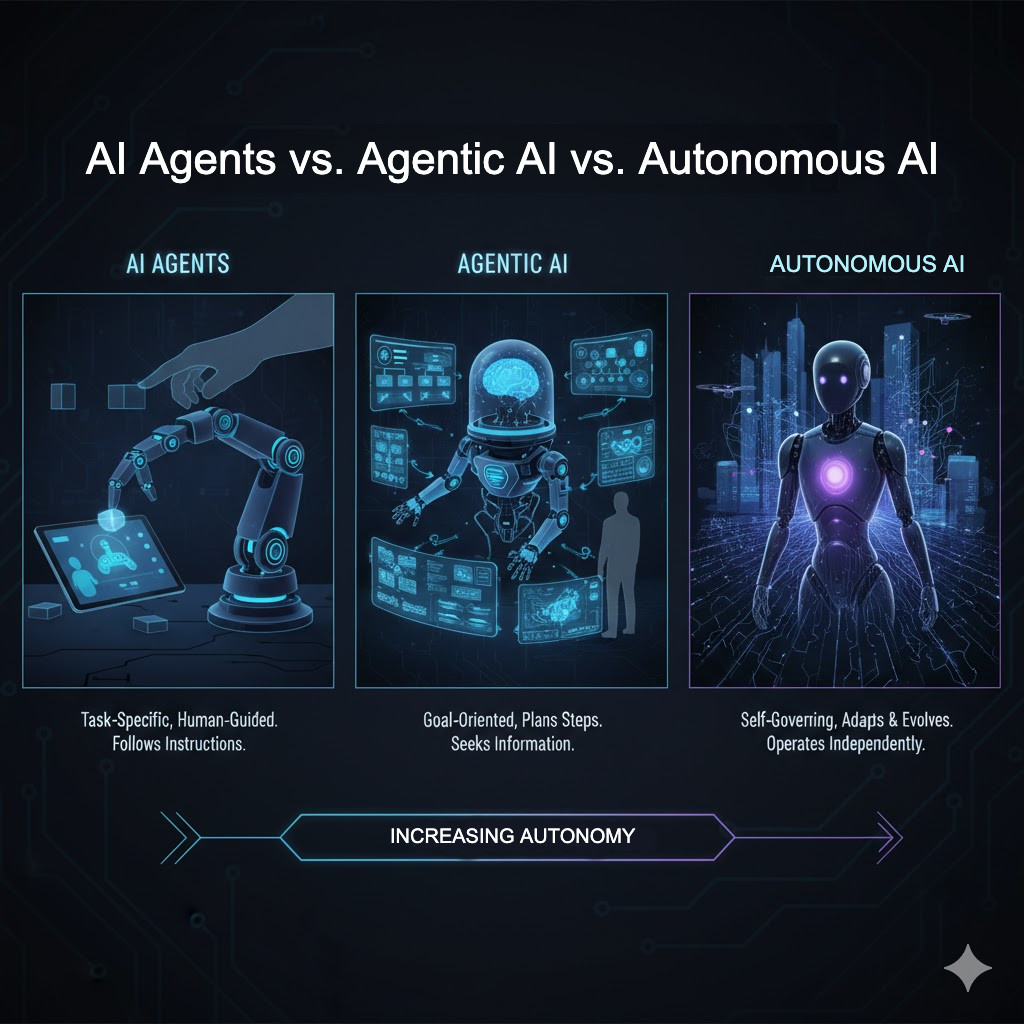
For a while now, AI's role in software development has largely been one of assistance. Think autocomplete suggestions, code generation tools, or smart linting – valuable, no doubt, but ultimately subservient to human input. We're now seeing the conversation pivot, moving towards a more ambitious vision: Agentic AI and autonomous agents. This isn't just about faster code; it’s about a paradigm shift where AI orchestrates entire development processes.
From a developer's standpoint, this evolution warrants a close look. What does 'autonomous' really mean in this context? Is it a productivity boon, or a new layer of complexity we’ll have to wrangle? Let’s unpack it.
Beyond Assistance: What Defines Agentic AI?
At its heart, Agentic AI moves beyond simply generating code snippets or summarising documents. It envisions systems where intelligence is distributed across multiple specialized agents, each capable of perceiving, reasoning, planning, and acting to achieve a broader goal. Microsoft's insights into "Engineering autonomous agentic development" highlight this transition, describing it as moving from AI-assisted coding to "AI-orchestrated systems." Instead of optimizing isolated developer actions, it treats software development as a governed, multi-stage lifecycle. This implies agents working together, pushing tasks through planning, validation, implementation, and deployment phases.
The critical distinction here is autonomy within a bounded context. These aren't omniscient AIs; they are designed to perform specific functions, interacting with other agents and humans to advance a project. Think of a software delivery pipeline, but instead of static scripts, each stage might be managed by an intelligent agent.
The Multi-Agent System Paradigm
Building an agentic system means embracing a multi-agent architecture. This isn't just a fancy term; it's a design philosophy that brings several key principles to the forefront:
Specialization and Bounded Scope
Each agent is purpose-built. An agent might be responsible for generating initial project plans based on a high-level requirement, another for writing specific code modules, and yet another for conducting tests or managing deployments. This decomposition is crucial. By assigning explicit input-output contracts and well-defined execution boundaries, you create a system where each component understands its role, reducing ambiguity and potential for unintended actions. It’s akin to microservices, but with inherent intelligence and a goal-oriented nature.Intent Preservation
One of the significant challenges in complex, multi-stage processes is ensuring the original human intent isn't lost or misinterpreted as work progresses. An agentic system aims to preserve this intent. As a request moves from a conversational planning stage to execution, the agents involved must maintain fidelity to the initial goal. This often involves structured communication protocols and shared representations of the evolving task.Deterministic Transitions and Human Oversight
While the term "autonomous" might suggest complete hands-off operation, real-world agentic systems for enterprise applications often incorporate crucial human checkpoints. As outlined by Microsoft, progression between stages in a multi-agent software delivery system occurs "only after human validation at irreversible transitions." This is a pragmatic necessity. It enables autonomy through deterministic state transitions and contract enforcement, rather than relying solely on open-ended model reasoning. For developers, this means designing clear interfaces for human intervention and approval, ensuring that control remains with the humans when it matters most.Architectural Implications for Software Delivery
Consider a full-cycle software development process. An agentic approach might involve:
Requirement Analysis Agent: Takes a high-level user story, breaks it down, and identifies necessary components.
Planning Agent: Develops a detailed task breakdown, estimates effort, and assigns work to other agents or human developers.
Code Generation Agent: Writes code modules based on specifications from the planning agent, adhering to architectural guidelines.
Testing Agent: Generates test cases, executes them, and reports bugs.
Refactoring Agent: Analyzes code quality, identifies areas for improvement, and suggests or implements refactoring.
Deployment Agent: Manages the build, packaging, and deployment to target environments.
Each agent doesn't operate in a vacuum. They communicate, pass structured data, and enforce contracts. The system's robustness depends on how well these interactions are designed and governed. This hybrid model, combining human expertise with agentic execution, seems to be the current sensible path forward for complex enterprise systems.
Engineering Challenges and Pragmatic Considerations
- While the promise is significant, deploying agentic AI systems isn't without its hurdles. From a developer's perspective, we need to be realistic:
- Complexity Management: Designing and debugging a system with multiple interacting, intelligent agents can quickly become intricate. Tracing causality and understanding emergent behavior will be a non-trivial task. Clear logging, monitoring, and observability will be paramount.
- State Management Across Agents: How do agents maintain and share relevant context and state across a multi-stage workflow? Centralized knowledge bases, shared memory, or explicit message passing protocols need careful architectural consideration.
- Contract Enforcement and Validation: Agents must rigorously adhere to their defined input/output contracts. Deviations can cascade into significant issues. Robust validation layers, both automated and human-gated, are essential.
- Scalability and Reliability: Building agentic systems for production means addressing typical engineering concerns: fault tolerance, latency, throughput, and consistent performance under load.
- Governance and Trust: Determining the appropriate level of autonomy for each agent, defining clear escalation paths, and ensuring transparent decision-making processes are crucial for fostering trust and manageability. You need to know why an agent did something, not just what it did.
- Tooling Maturity: The ecosystem for building and orchestrating agentic AI is still nascent. While frameworks are emerging, they are rapidly evolving, meaning developers will need to stay agile and adaptable.
The Developer's Outlook
For the pragmatic developer, Agentic AI isn't a silver bullet that will eliminate the need for engineering expertise. Instead, it represents a powerful new abstraction layer for building complex, automated workflows. It encourages us to think about problems in terms of distributed intelligence and orchestrated tasks rather than monolithic applications or simple API calls.
Getting started isn't about mastering every bleeding-edge LLM. It's about understanding the principles: decomposing problems, defining clear agent responsibilities, designing robust communication channels, and integrating human oversight at critical junctures. The